
Buying a stone farmhouse in Chianti: the technical checklist
- Chianti
- Farmhouse
- Buying property in Italy
- Tuscany
- Checklist
The short answer
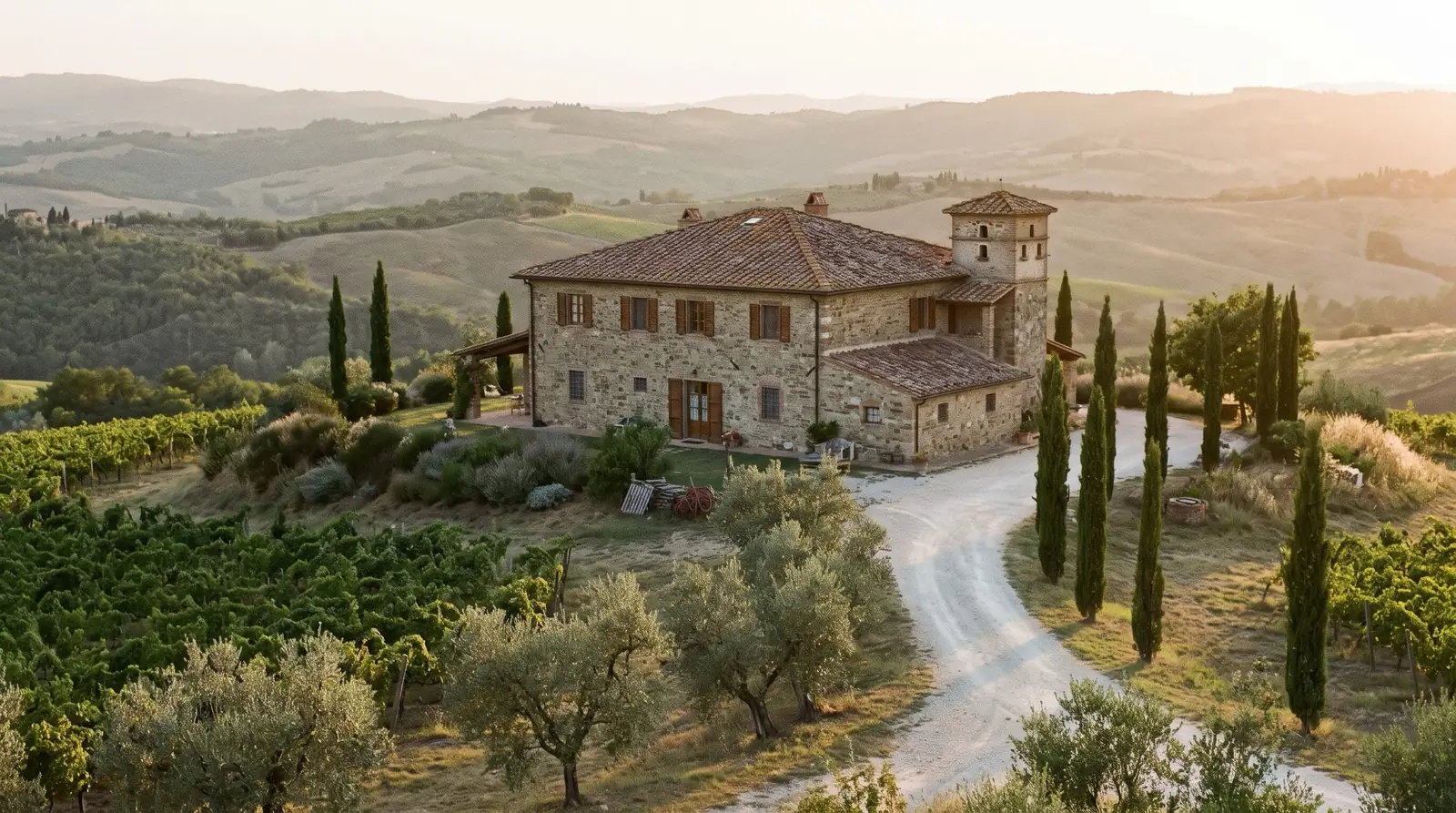
Before you buy a stone farmhouse in Chianti, check five things: that every part of the house is legal, that the catasto plan matches it, what the rural and landscape rules let you change, the condition of the structure, and the land, water and drains that come with it. A beautiful listing tells you none of this.
I'm Salvatore, a licensed geometra and technical expert for legal matters, based in Lucca. I check houses for foreign buyers across Tuscany before they sign. This is the checklist I use on a Chianti farmhouse, from Greve and Castellina to San Casciano in Val di Pesa and the Certaldo hills.
Most of these points sit in documents, not in the walls. That is why a farmhouse can look perfect at the viewing and still hide a problem that blocks the deed or costs tens of thousands to fix.
The checklist: 10 things to check before you sign
1. Is the whole house legal?
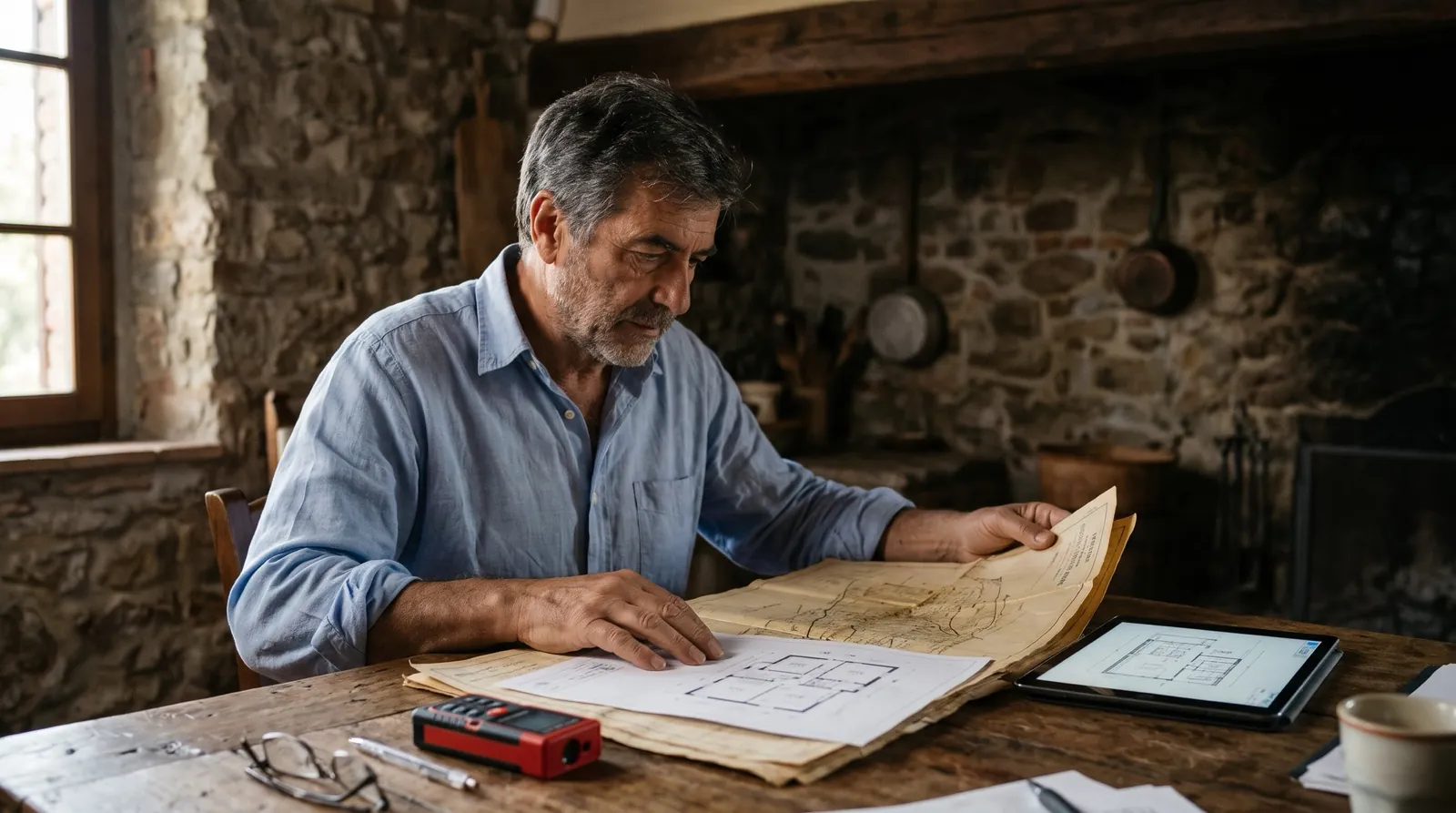
In Italy, every room, annex and alteration must match a permit, or be legal for another reason. The legal state of a building is called stato legittimo (art. 9-bis, DPR 380/2001).
Many Chianti farmhouses are centuries old and were built when no permit was needed. That is fine, but it has to be proven with documents: the first catasto maps, historic aerial photos, old deeds. Everything added later, such as an extension, a closed loggia, a raised roof or a converted barn, needs its own permit or amnesty (condono). I explain how this works in Old House, No Building Permit on File? It May Still Be Perfectly Legal.
What I check: the town hall archive, every permit and amnesty on file, and the historic records for the original building.
2. Does the catasto plan match the house?
The floor plan filed with the Italian land registry (catasto) must match the house as it stands. Italian law requires the deed to state this. Without that statement the deed is void (art. 29, c. 1-bis, L. 52/1985).
On old farmhouses I often find plans from the 1940s–1970s that no longer match: a wall moved, a window opened, a stable turned into a kitchen. Some rural buildings were never registered as houses at all and still appear only on the land map. Owners had to register them by 30 November 2012 (Ediltecnico), but not all did.
What I check: the plans on file against my own survey of the house.
3. Was it ever a farm building?
A casa colonica was built for farming. If the house, or one of its outbuildings, is still classed for agricultural use, turning it into a home or a holiday let follows the Tuscan planning law (L.R. 65/2014) and the town's own rules. It can mean fees, a legal undertaking, or a simple no.
What I check: the registered use of each building and what the town plan allows in that rural zone.
4. What can you change?
Much of Chianti is protected landscape. External works, such as new windows, a pool, a pergola, a new roof or a change of colour, usually need landscape approval (autorizzazione paesaggistica) on top of the building permit. Some changes are not allowed at all. For the different building permits, read CILA, SCIA or Building Permit: which application do you need?
What I check: the protection rules on the plot, and whether your renovation plan is realistic before you commit.
5. What state is the structure in?
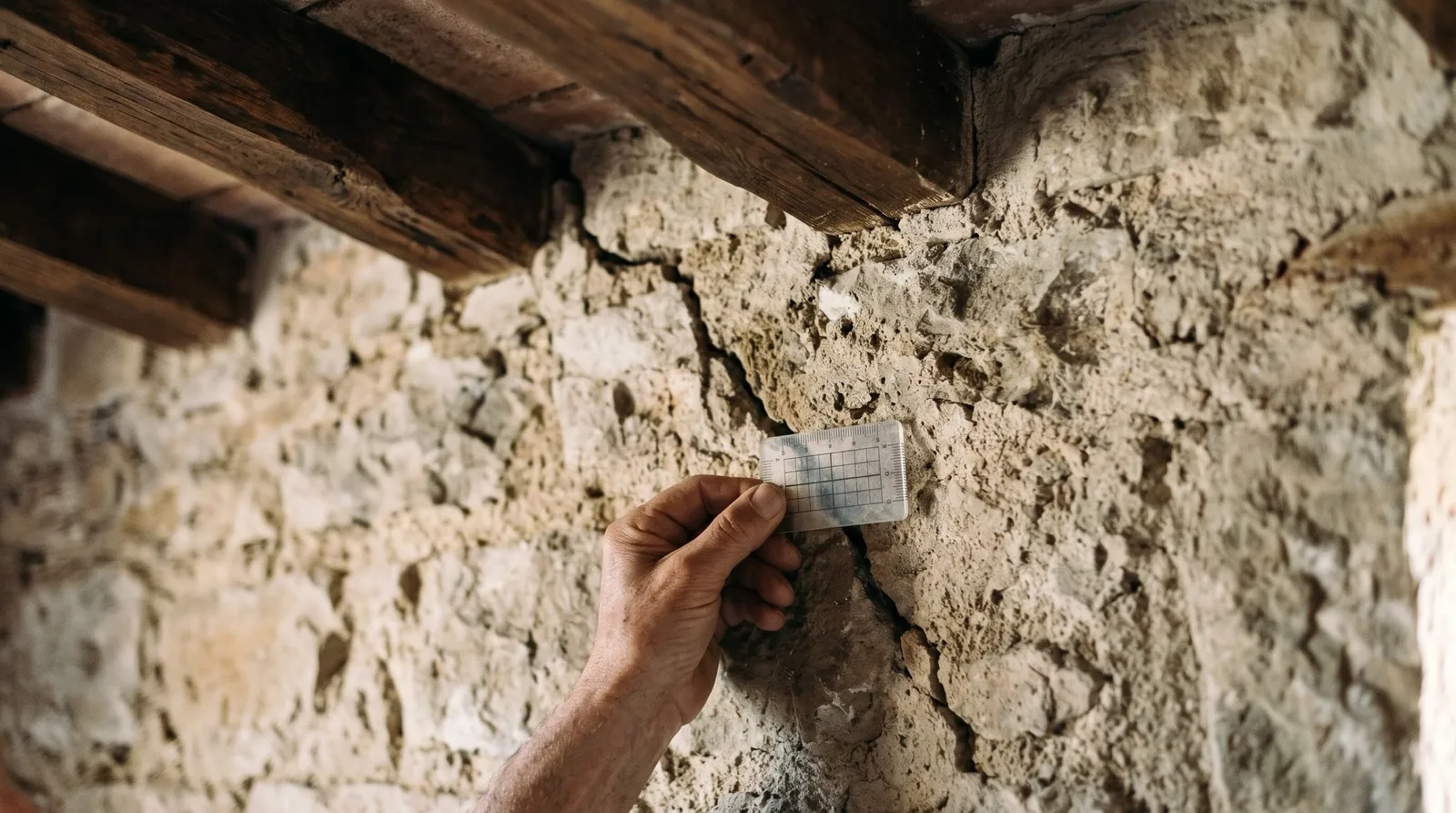
Stone walls, timber beams and terracotta roofs are beautiful, and they age. I look for cracks in load-bearing walls, rising damp, rotten beams and settled foundations. Tuscany is a seismic region, so structural work needs a filing with the regional seismic office.
What I check: the structure on site, with a clear note of what needs a specialist engineer.
6. Are the pool, annexes and pergolas legal?
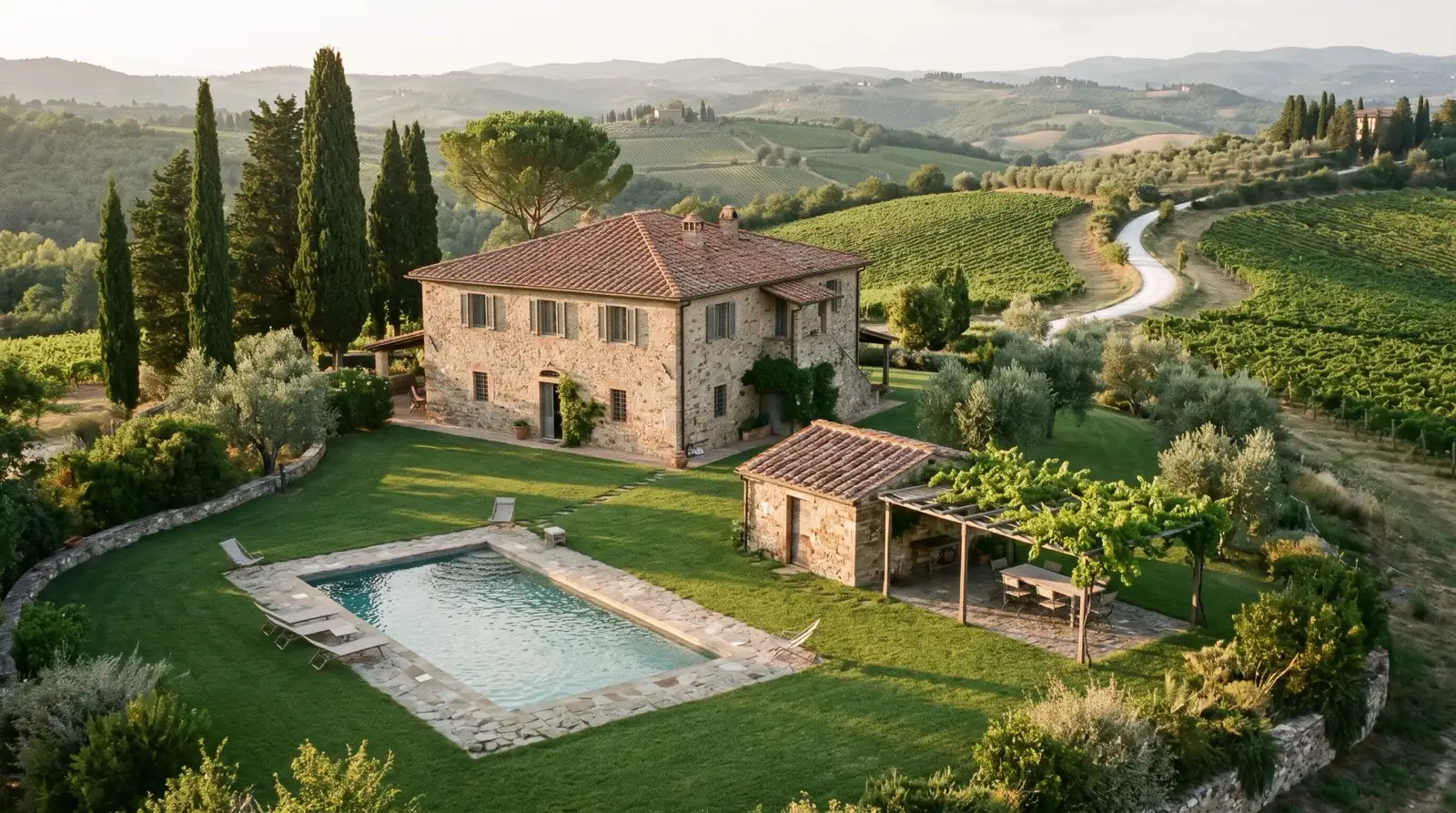
These are the most common surprises in a Chianti listing. A pool, a guest annex, a covered parking area or a wooden pergola each needs its own permit. Words like rustic annex or to be regularised in a listing usually mean it was not authorised.
What I check: every structure on the plot against the permits on file, and what legalising it would cost, if it is possible at all.
7. Who else can buy the land?
If the property includes farmland, Italian law can give a tenant farmer, and in some cases a neighbouring farmer, the right of first refusal (prelazione agraria) at the same price (art. 8, L. 590/1965). If they are not properly notified, they can later reclaim the land from the buyer.
What I check: how the land is classified and used, so your notary can handle any pre-emption rights before the deed.
8. Where do water and drains go?
Many farmhouses are not on mains water or sewage. Water may come from a well, and waste may go to a septic tank. Both need to be authorised and working.
What I check: the water source, the drainage system and its permits.
9. How do you reach the house?
A white gravel road through the vines may cross someone else's land. Your right to use it should be written down (servitù di passaggio), along with who maintains it.
What I check: the access route on the catasto map and the rights recorded in the deeds.
10. What will it cost to live in?
Every sale needs an energy certificate (APE). Old stone houses usually rate low, which means high heating costs and, often, upgrade works. I add these to the costs of legalising and renovating, so you know the real number before you make an offer.
Frequently asked questions
I want a villa with land, but I don't want to run a farm. Is that realistic in Tuscany?
Yes, and many buyers do it. Most farmhouses with a few hectares of olives or woodland are bought as homes, not farms. What you need to know is how the land is classified, what upkeep it needs (olive groves and woods must be maintained, and some trees cannot be cut freely) and whether a tenant farmer has rights on it. You can lease the land to a local farmer, but that creates rights too. I check all this before you make an offer.
Can I turn the barn into a guest house or holiday let?
Sometimes. It depends on how the barn is registered, whether it was built legally and what the town plan allows in that rural area. Check before you buy, not after: if the conversion is not allowed, the price of the barn is the price of a barn.
Can I add a pool?
Often, but not everywhere. A pool needs a building permit and, in most of Chianti, landscape approval. Town rules can set its size, position and finishes. I check whether it is feasible on that specific plot.
The seller says the house has "no problems". Isn't the notary checking everything?
The notary checks ownership, mortgages and the documents needed for the deed. The notary does not compare the house with its permits on site. That is a technical check, and it is the one I do.
When should I call a geometra?
Before you sign the preliminary contract (compromesso) and before you pay a deposit. Once that is signed, walking away usually costs you money. For the general checks on any Tuscan property, read Buying a House in Tuscany: 7 Technical Checks to Make Before You Sign.
Found a farmhouse in Chianti?
Send me the listing or the address. In a free 15-minute video call, in English, we go through the property and what needs checking. If you go ahead, I visit the house, check the permits, the catasto and the rules at the town hall, and send you a clear written report before you sign.
This article is general information, not legal advice. Every property is different: rules vary by town and by plot.
Share this article
Need technical advice on a property in Italy?
Tell us about your project: we will reply within 24 hours, in English.
Book your free call