
Buying a House in Tuscany: 7 Technical Checks to Make Before You Sign
- Tuscany
- Buying property in Italy
- Farmhouse
- Property survey
- Lucca
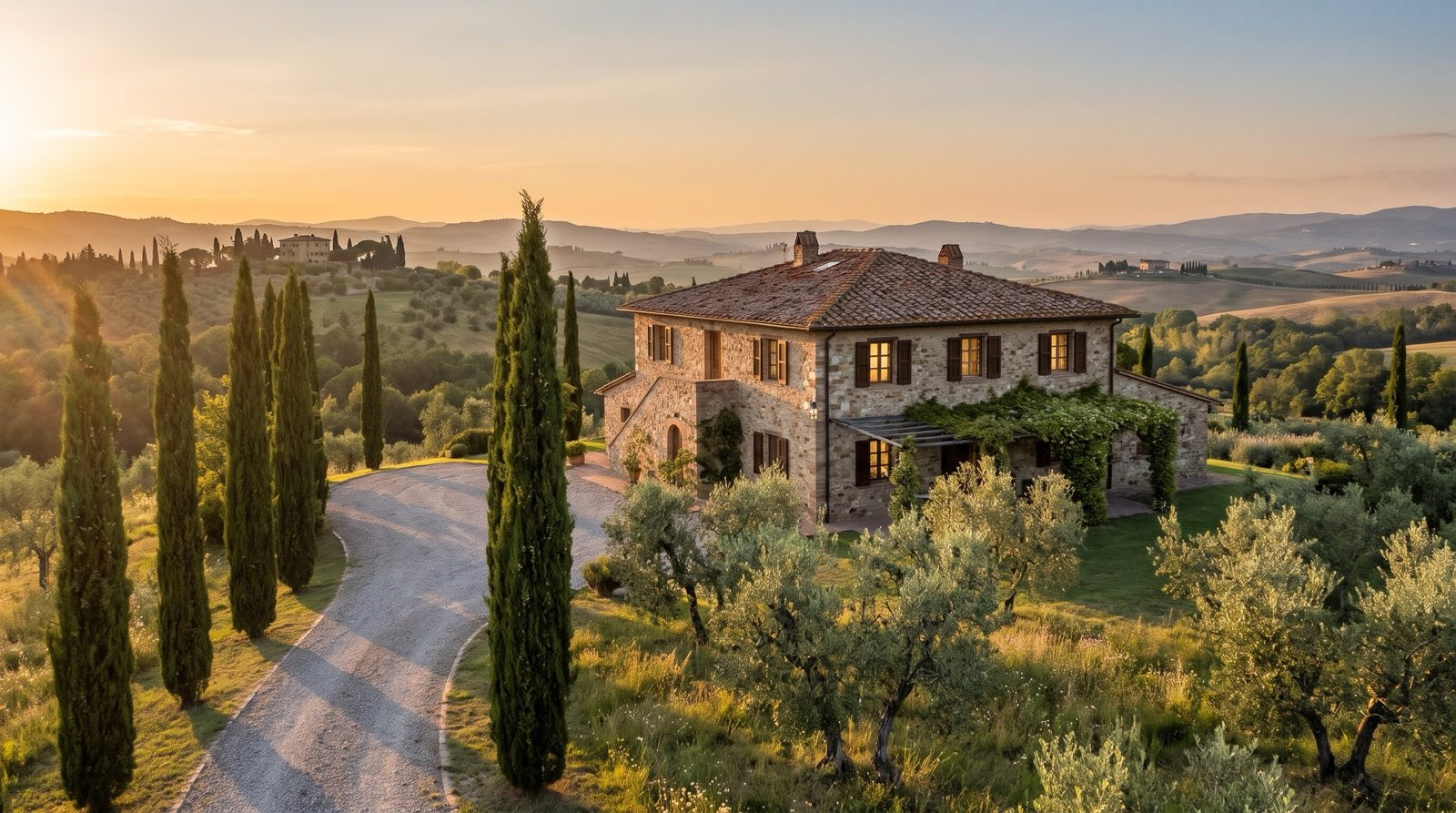
Buying a house in Tuscany is a dream for many people. A stone farmhouse among the hills, an apartment inside the walls of Lucca, a village home with a view. But behind the postcard there is often a problem that nobody mentions: the house you see may not match the house on paper.
I am Salvatore La Rocca, a geometra (the Italian equivalent of a chartered surveyor) based in Lucca and a technical expert for legal matters. Every year I see buyers, Italian and foreign, who discover problems only after the purchase, when fixing them costs much more. Here are the seven checks I recommend before you sign anything.
1. Building compliance: is the house legal?
In Italy every building and every change to it needs a permit. Many older properties have extensions, closed porches, converted attics or outbuildings that were never authorised. A house can be sold even with these irregularities, but once you own it, the problem becomes yours.
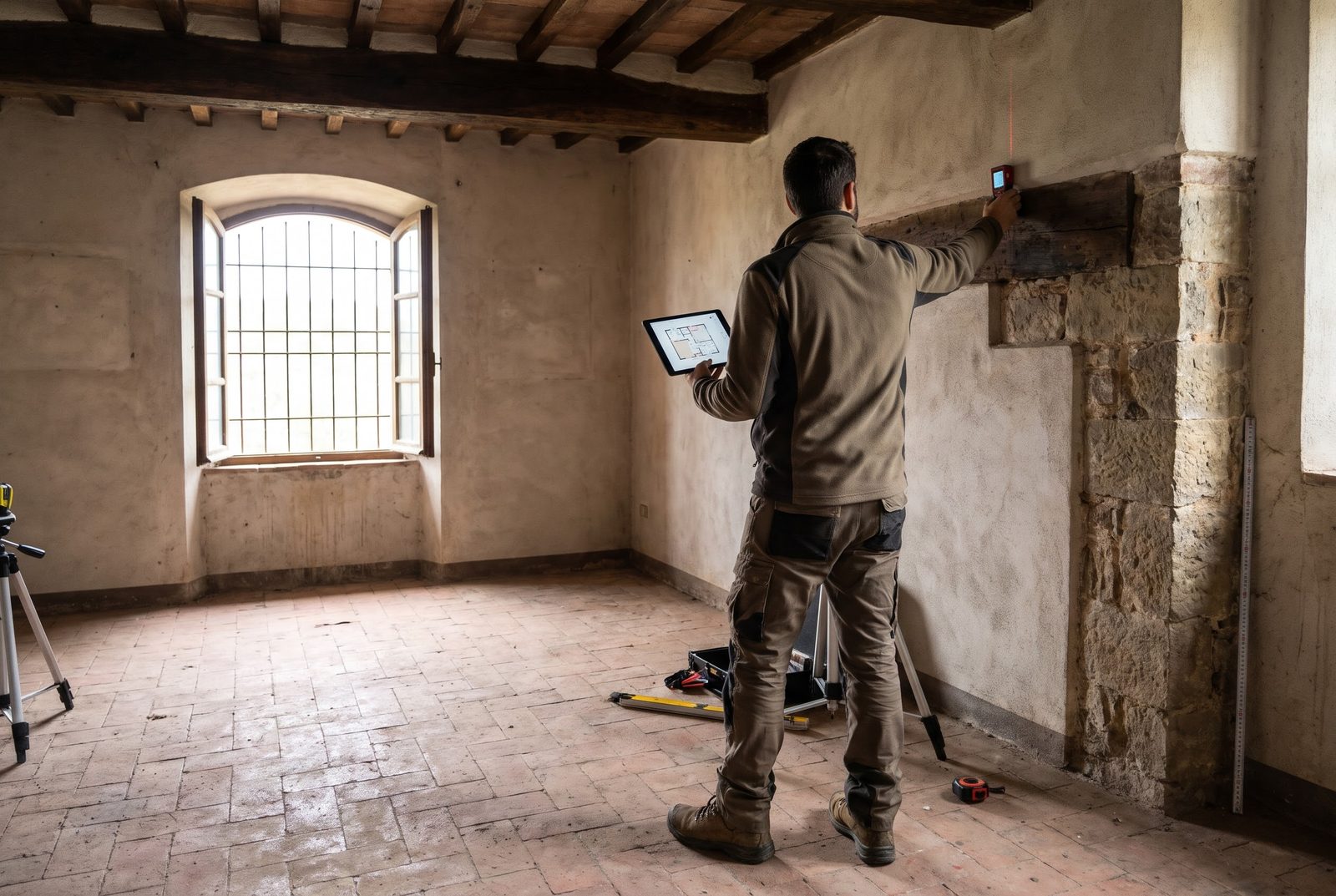
The notary checks the documents, not the building itself. Only a technical survey compares the approved drawings at the town hall with what actually stands on the land.
2. The cadastral plan must match reality
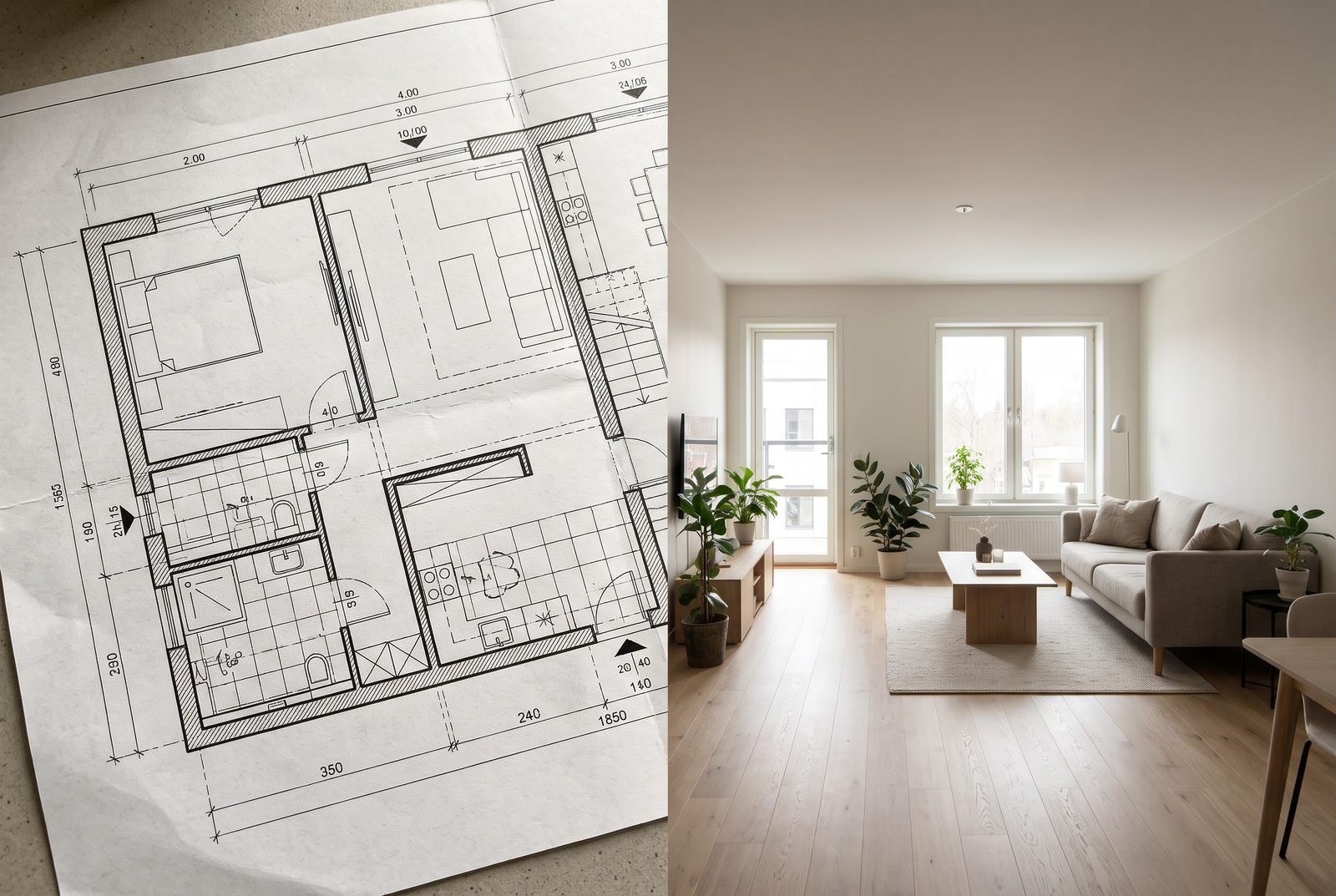
The Catasto is the Italian land and property register. For each unit there is a floor plan, and since 2010 the seller must declare in the deed that it matches the actual state of the property. In practice, plans are often outdated: a wall moved, a bathroom added, a room that does not exist anymore.
3. Farmhouses and rural buildings: the most common traps when buying a house in Tuscany
Tuscan farmhouses are beautiful, but they are also where I find the most issues:
- barns or stables turned into living space without a change-of-use permit;
- swimming pools, pergolas and garages built without authorisation;
- old rural buildings never registered in the Catasto;
- land classified as agricultural, which limits what you can build or change.
4. Restrictions: landscape, historic centres and earthquakes
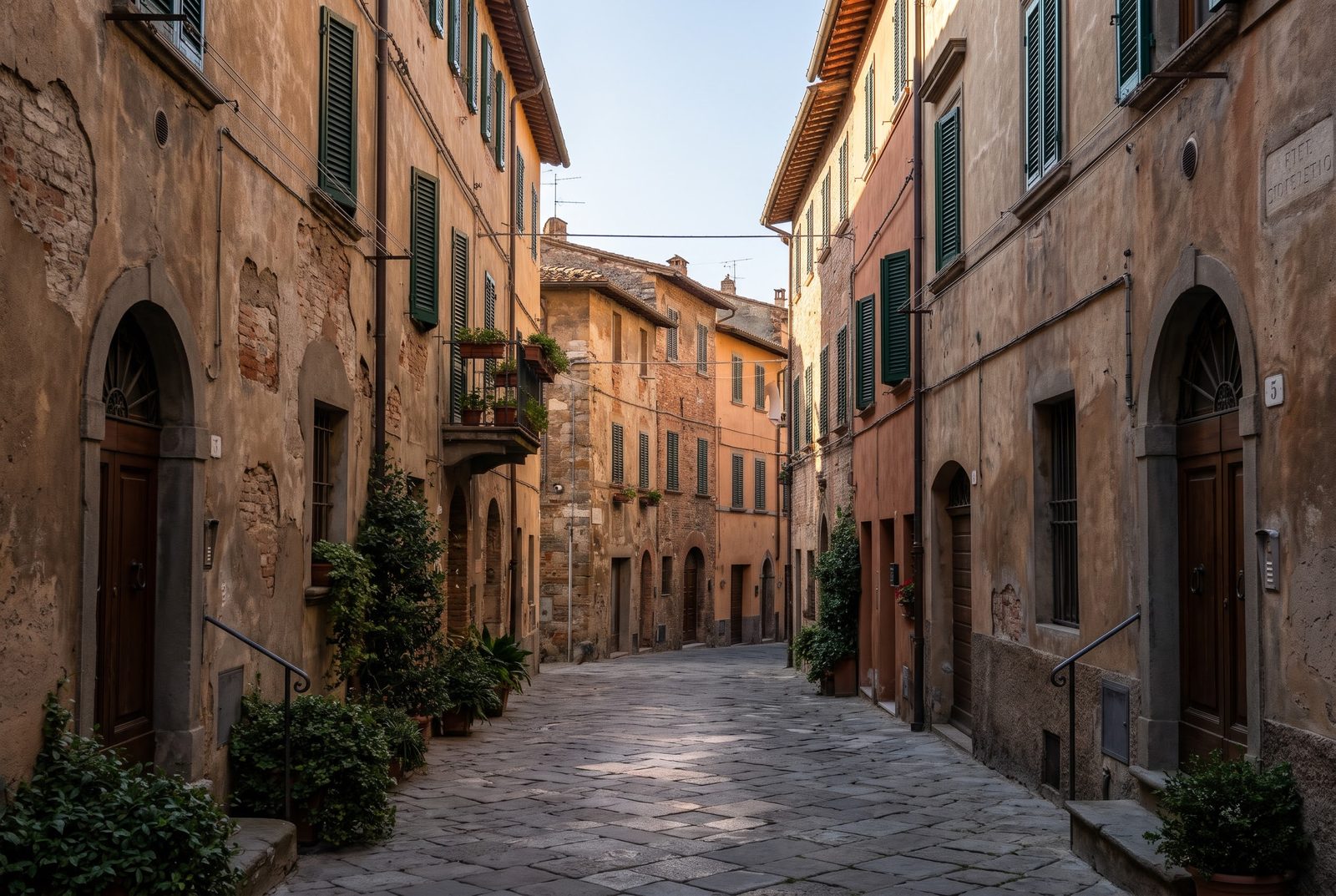
Large parts of Tuscany are under landscape protection. Historic centres such as Lucca have strict rules on facades, windows and materials. Much of the region is also in a seismic zone, which affects renovations and structural work. These restrictions are not a reason to avoid buying, but they change what you can do and how much it costs.
5. Boundaries, access and shared rights
In the countryside, the boundary on the ground is not always the one on the map. Check how you reach the property: is the access road private, public or crossing a neighbour's land? Are there shared wells, pipes or rights of way? Many of the legal disputes I work on as a technical expert start exactly here.
6. The real condition of the building
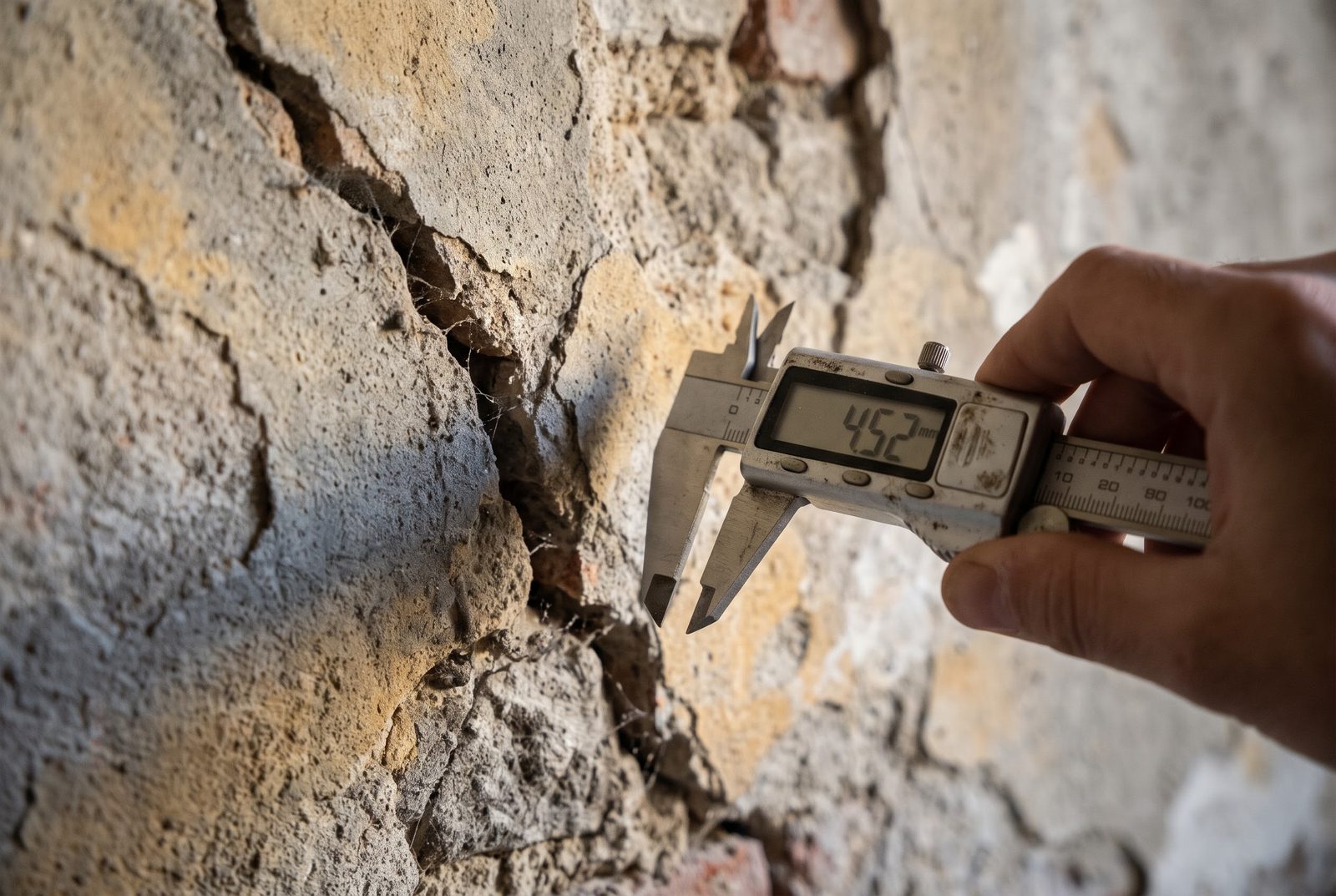
Cracks, damp walls, roof leaks and old systems are common in historic buildings. Some are cosmetic, others are serious. A survey distinguishes a settled crack from a structural movement, and condensation from water infiltration.
7. The hidden costs after the purchase
Regularising an unauthorised extension, updating the cadastral plan, bringing systems up to standard or demolishing what cannot be legalised: all of this has a cost. Knowing it before you sign gives you a strong argument to negotiate the price, or to walk away.
When to do the checks
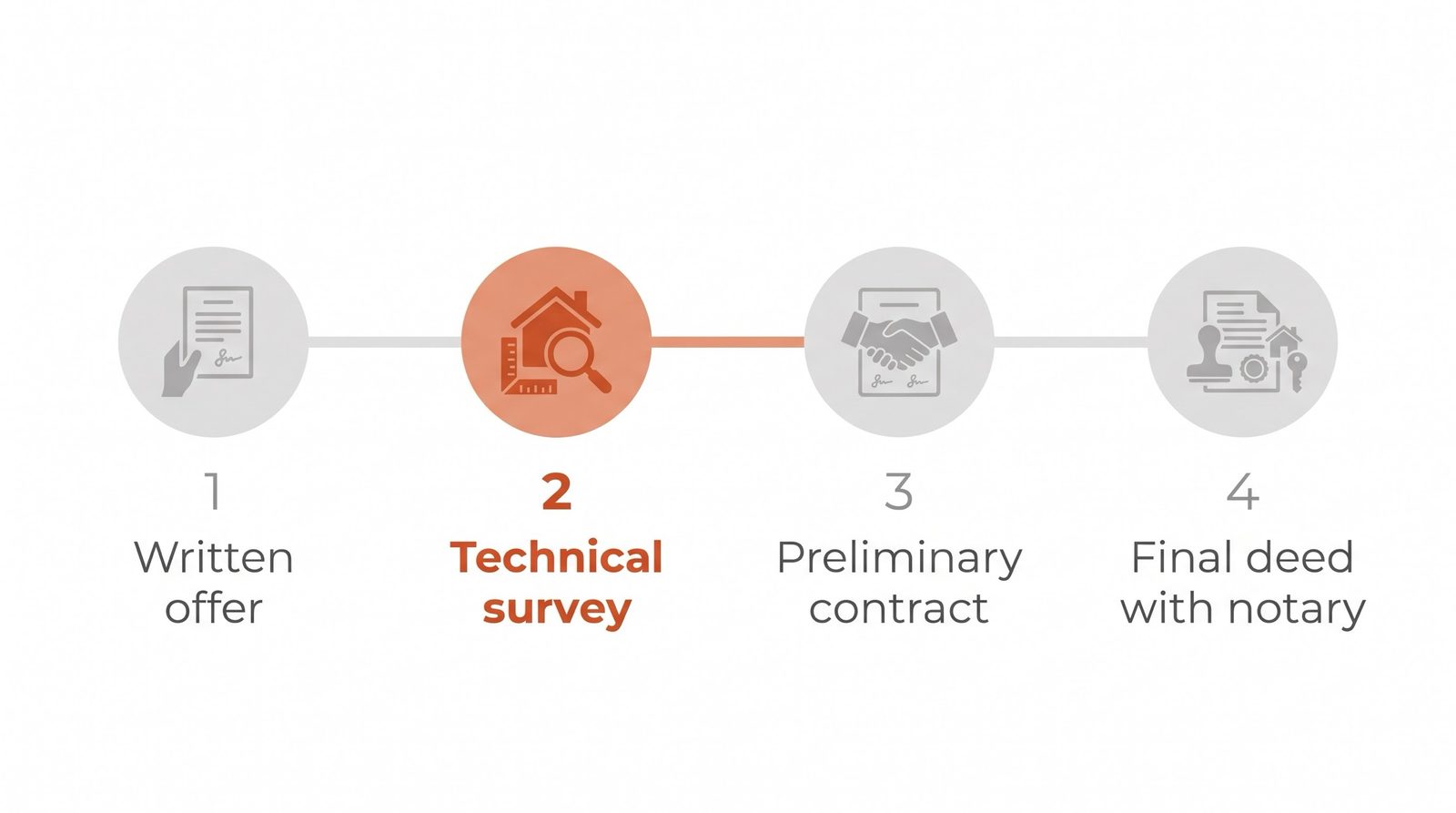
In Italy the purchase usually follows three steps: a written offer, a preliminary contract (compromesso) with a deposit, and the final deed with the notary (rogito). The right moment for a technical survey is before the preliminary contract, because after that you have already committed money.
How I can help
I offer a pre-purchase survey for foreign buyers in Tuscany. It includes the check of building permits and cadastral records, an on-site inspection, and a clear written report in English with the problems found and the estimated costs to fix them. We can discuss the results by video call, wherever you are.
Thinking about buying a house in Tuscany? Book a video call and tell me about the property you have in mind.
Share this article
Need technical advice on a property in Italy?
Tell us about your project: we will reply within 24 hours, in English.
Book a video call