
On Paper vs On Site: Does the House Match the Approved Drawings?
- Building compliance
- Approved drawings
- Buying property in Italy
- Geometra
- Tuscany
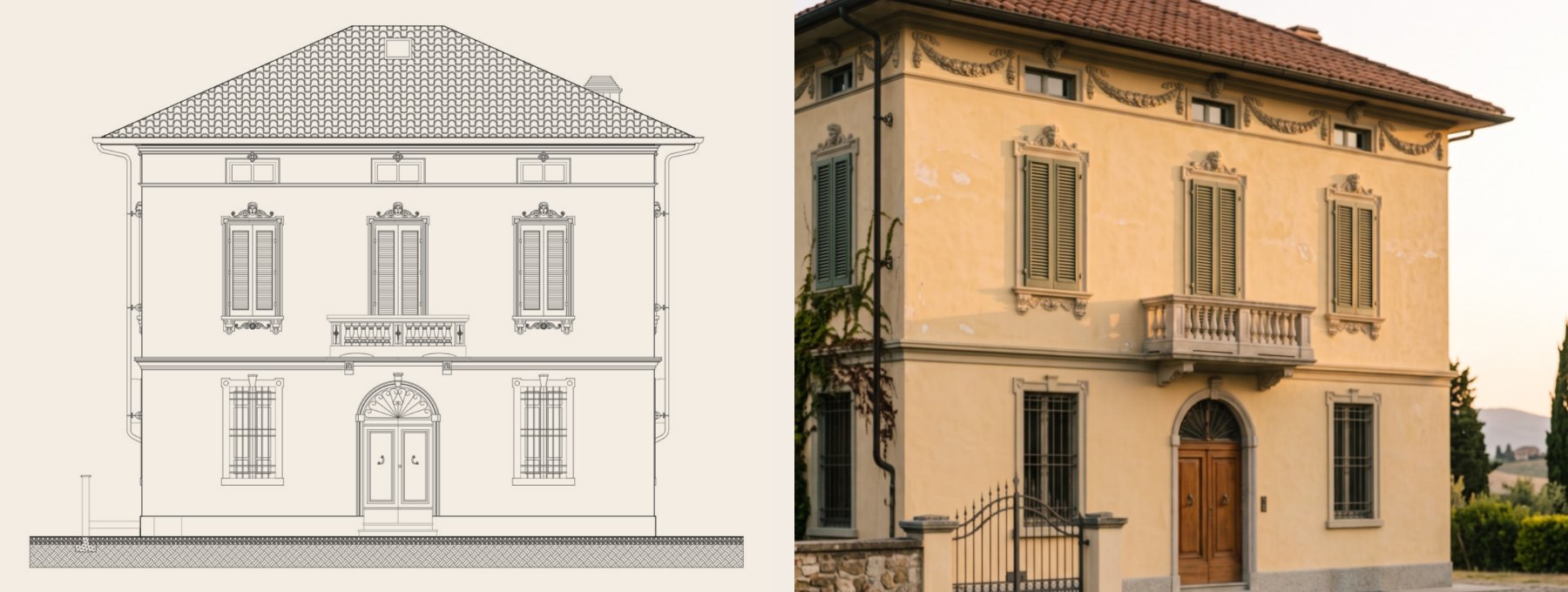
Every house in Italy exists twice. Once on paper, in the drawings approved by the town hall, and once on site, as it was actually built and then changed over the years. When you buy a property, you want the two to match. Very often, they don't.
I am Salvatore La Rocca, a geometra in Lucca. Comparing these two versions of a house is one of the most important checks I do before a client signs anything. Here is why.
On paper: the house the town hall approved
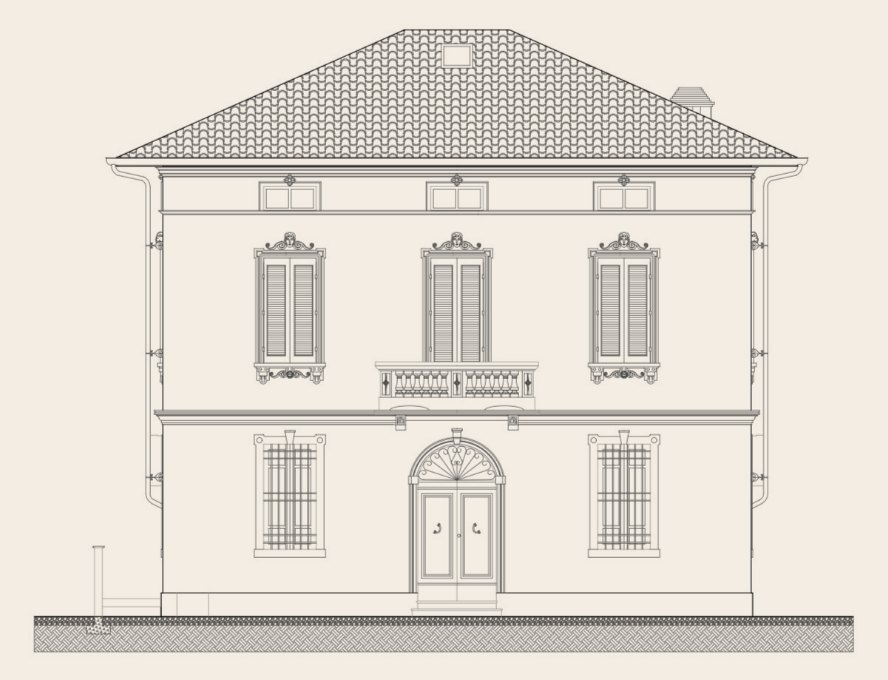
Every building permit issued in Italy comes with a set of drawings: floor plans, sections and elevations showing exactly what the owner was allowed to build. These drawings are kept in the municipal archive, together with any later permits for extensions, renovations or changes of use.
Taken together, they define what Italian law calls the "stato legittimo": the legitimate state of the property. It is the only version of the house that is legally recognised.
On site: the house that was actually built
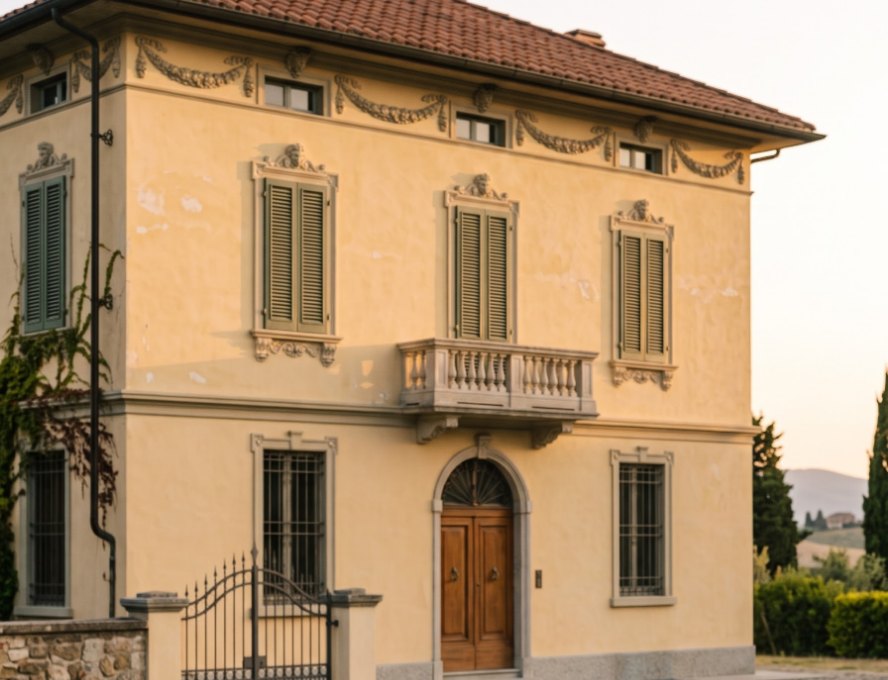
At first glance the two images above look the same. Look closer: the boundary wall and the iron gate on the left do not appear in the approved drawing, and the decorations on the facade are different. In a real survey, details like these are exactly what I look for, together with the ones you cannot see from the street.
The most common differences
Over the years I have found the same discrepancies again and again:
- extensions and closed porches: a veranda glazed in, a terrace turned into a room;
- attics and basements converted into living space without a change of use;
- windows and doors added, moved or enlarged;
- internal layout changed: walls removed, a second bathroom added;
- outbuildings: garages, sheds, pergolas, swimming pools and boundary walls never authorised;
- different heights or footprints from those shown in the drawings.
Some of these are minor. Others affect the volume or the use of the building, and that is where the real problems start.
The cadastral plan is not proof of legality
This is one of the most common misunderstandings among foreign buyers. The Catasto (land registry) plan is a tax document: it describes the property to calculate taxes, and the seller must declare in the deed that it matches the current state. But a building can be correctly registered in the Catasto and still be illegal from a planning point of view.
Only the comparison with the permits in the town hall archive tells you whether the house is legitimate. That is why I always check both. If you want to know more about the land registry, read What Does a Geometra Do?
Small differences, big differences
Not every difference is a problem. Italian law allows construction tolerances: small deviations in measurements, within a few percent depending on the size of the unit, are not considered violations. Recent reforms (the 2024 "Salva-casa" decree) have widened these tolerances and made some minor irregularities easier to settle.
Beyond the tolerances, there are two possibilities:
- the irregularity can be legalised with a retrospective application (sanatoria) and the payment of a fine. It takes time and money, but the problem is solved;
- the irregularity cannot be legalised, for example an unauthorised volume in a protected landscape area. In that case the only solution may be to restore the original state, or even demolish.
Knowing which case you are in before you buy is what protects you. Once the deed is signed, the problem is yours.
How I check it
- I request the permits from the municipal archive. This formal access request can take several weeks, so it is best to start as early as possible.
- I check the cadastral records and the floor plan filed with the Catasto.
- I inspect the property on site, with measurements and photos.
- I compare the three versions: approved drawings, cadastral plan and reality.
- I write a report in English with every difference found, whether it can be legalised, and the estimated costs and timing.
The right moment for this check is before the preliminary contract (compromesso), when you have not yet committed a deposit. For the full list of checks I recommend, read Buying a House in Tuscany: 7 Technical Checks to Make Before You Sign.
Same house?
The house in the listing photos is the one that was built. The house you are legally buying is the one on paper. I make sure they are the same house before you sign.
Thinking about buying a property in Tuscany? Book a video call and tell me about the house you have in mind.
Share this article
Need technical advice on a property in Italy?
Tell us about your project: we will reply within 24 hours, in English.
Book a video call